Alyce Mitchell, UniBreak, Nepal
Stepping off the plane in Kathmandu, the capital of Nepal was a pupil dilating feast for the senses and definitely comparable to looking through a kaleidoscope of sights, sounds and colours. I consider myself fairly well travelled, so the idea of culture shock was merely an explanation drummed into us from our worried parents and friends which I simply shrugged off. Talk about sensory overload!
So why Nepal and why Antipodeans? As a nursing student, I was eager to be exposed to the underdeveloped health care systems that exist in countries less fortunate than Australia, and from my point, there’s no better way than embarking on a 4 week placement to gain my own firsthand experience. I was lucky enough to have the support from the Antipodeans crew, who organised everything so all I had to do was turn up (plus a bit of paperwork).
I arrived on flight EY 461 from Melbourne via Abu Dhabi, equalling a total air time of roughly 18 hours. Add 8 hours of time in transition and you have one very dishevelled girl with an oversized backpack and a trusty lonely plant guide tucked tightly under her arm. I’d done my research, “don’t let people carry your bags”, “always agree on a taxi fare before getting in”, and all the other things you read about when travelling solo to underdeveloped countries, (which done little to prepare me).
Leaving the airport I was faced with my first challenge, “Namaste! You need taxi!?” Naturally I didn’t arrange myself with the Antipodeans transport because of my superior organisational skills, so I opted for spontaneity and jumped into the first beaten down Toyota Corola that presented itself (I wasn’t short of options). My driver took me through what felt like every back street known to man, bypassing rivers stockpiled with rubbish and locals enjoying a bath. In the meantime I was enjoying an entwined white knuckle ride complete with chickens, dogs, children, scooters, cars, buffalo and numerous sacred cows! Red lights and stop signs mean about as much as a speed limit sign in the Northern Territory, more commonly utilised is the horn, and locals are not afraid to use it! 500 NRS got me safely to my 2 star hotel, which cost a grand total of 700 Rupees per night, (thats $8 Australian!) where I was greeted by the more than welcoming staff. I think that day I drank my body weight in Masala tea, is there such thing as over hospitability!?
I spent the next 5 days casually eating and roaming my way around Thamel, the tourist hub of Kathmandu; I indulged in about 100 Momo’s that week (highly recommend the buffalo assortment), in an attempt to avoid food poisoning from the array of available curry’s and lassi drinks. A flight over the one and only Mount Everest, standing tall at a whopping 8,848m really opened my eyes to the reason a lot of people come to this neck of the woods. The awe inspiring Himalayas! The remoteness of the villages we caught glimpses of made me appreciate the ease of accessibility that we have in Australia. These people would need to trek for days with 100kg packs on their head just to have food and supplies for their village and children! Not to mention the hungry trekkers that pass through on a daily basis. Day 6 arrived and it was time to board the Antipodeans bus bound for Pokhara! Alas, I found myself on yet another white knuckle ride (7 hours this time), weaving around hairpin bends overlooking a sheer drop into the rapids I would later find myself propelling down in an inflatable raft.
Arriving into Pokhara and meeting our Tibetan families to be spread feelings of nerviness, excitability and apprehension throughout the group. We boarded in a village of about 500 called Tashi Ling, a Tibetan settlement, housing refugees who have trekked over the Himalayas from Tibet escaping invasion from the Chinese. I shared with a fellow nursing student from Sydney, and our family consisted of our host mother, father and brother. We were fortunate enough to have our own little house separate from our family, but others shared with larger families with small children and the occasional snoring grandmother who lacked the English speaking ability altogether.
Each morning myself and a medical student from QLD boarded the 1960’s Toyota Hiace Bus for a pricey 20 RS, which was almost always filled with 30+ locals on their way to town, gripping the roof and hanging out the doors.
After a harrowing journey from Tashi Ling, we would arrive at the small 120 bed hospital where we would work for the next 4 weeks. I was in disbelief at the patients we were presented with. Many suffered systemic tuberculosis resulting in infected deep cavity wounds and organ failure, also the notorious intestinal worm often presented itself. The doctor we worked alongside informed us that many women suspected they were pregnant, until 10 months had passed and still no baby. It was in fact a severe case of intestinal worms, treated with a $2 tablet. The use of disposable gloves was unheard of, sterile towels were hand washed and hung over the balcony and the removal of a gallbladder under anaesthetic cost the patient around $15.
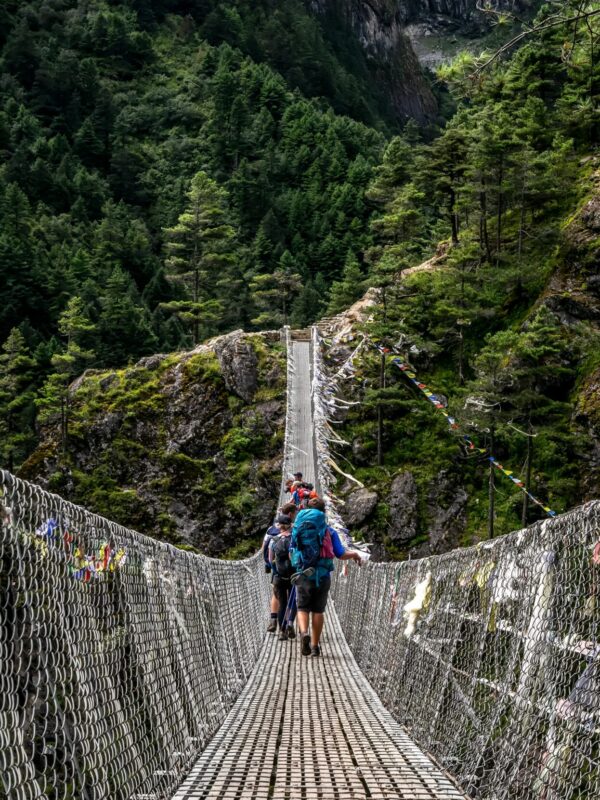
Throughout my 5 weeks in Nepal, I had so many invaluable experiences it’s hard to fit them into 1 small writing piece. Trekking through the Annapurna ranges with a local villager was a personal highlight, and the acceptance from the Tibetan community was like a home away from home. I wouldn’t swap my experiences for anything (except maybe the cold showers and squat toilets – which you curse if unfortunate enough to have a bout of food poisoning). But it all made for unforgettable memories and lifelong friends!
Alyce Mitchell, Nursing.